- The Galapagos Affair – A murder mystery story
- Floreana Island – Ghosts of the Galapagos Affair
- Blog
- Ecuador Family Travel: The Perfect Family Vacation
- The Galapagos Affair — A Chronological Reconstruction
Estimated reading time: 9 minutes

For terravelers arriving on Floreana Island, the name Wittmer appears quietly but persistently: in local history, in place names, in accommodations, and in the stories told at Asilo de la Paz. Unlike the sensationalized narratives surrounding the so-called “Galápagos Affair,” the history of the Wittmer family is not defined by mystery, but by continuity.
This is a documented account of the Wittmer family on Floreana—based on verifiable sources, archival records, and long-standing institutional references. It does not accuse, speculate, or dramatize. It simply follows what can be established with reasonable certainty, from the 1930s to the present day.
By the early 20th century, Floreana already carried a reputation as a difficult island—inhabited sporadically, dependent on freshwater access in the highlands, and shaped by failed settlement attempts. Its interior spring near what is now known as Asilo de la Paz made permanent residence possible, but never easy.
When European settlers arrived in the late 1920s and early 1930s, they were not entering untouched wilderness. They were stepping into a place with a long history of abandonment, return, and adaptation.
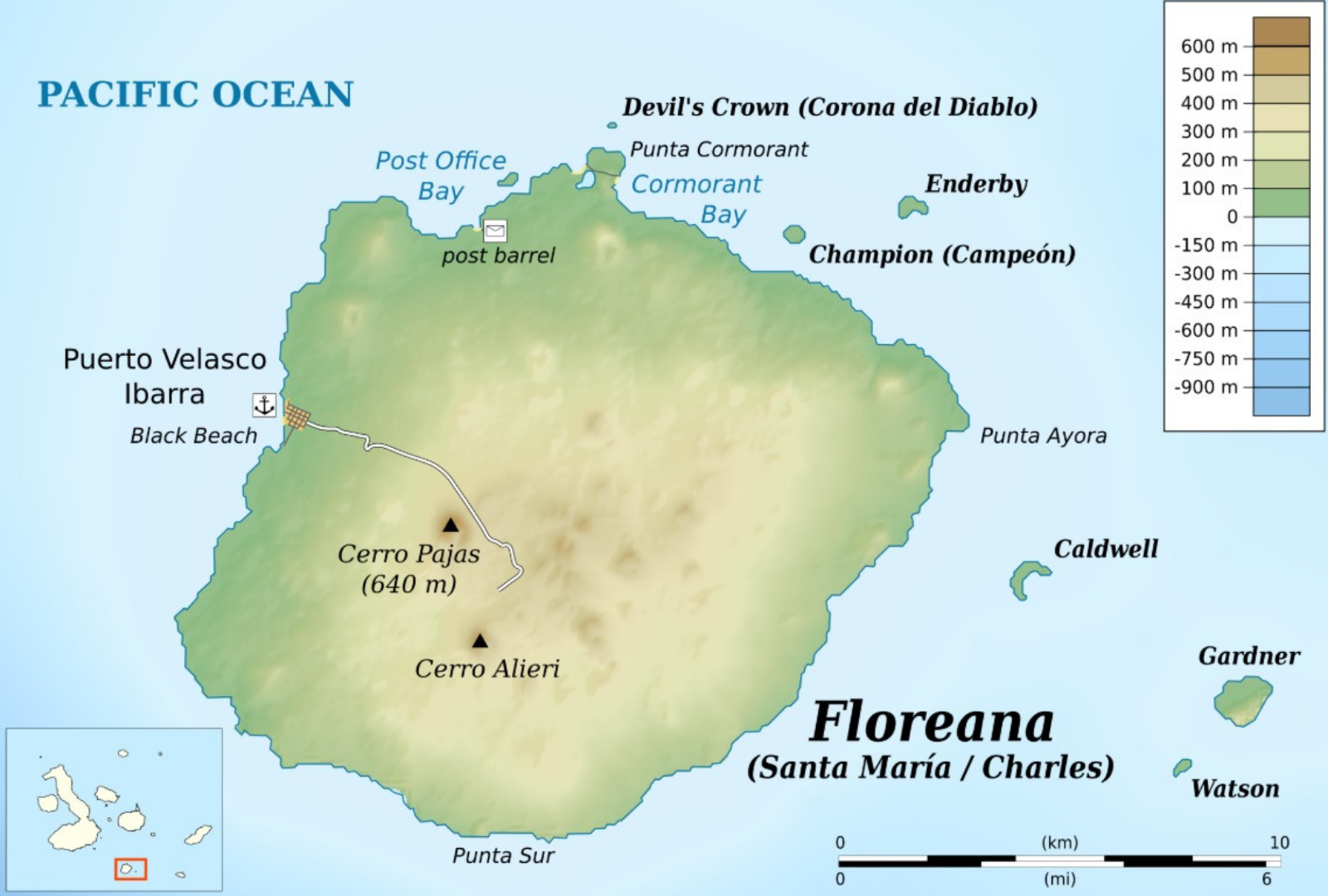
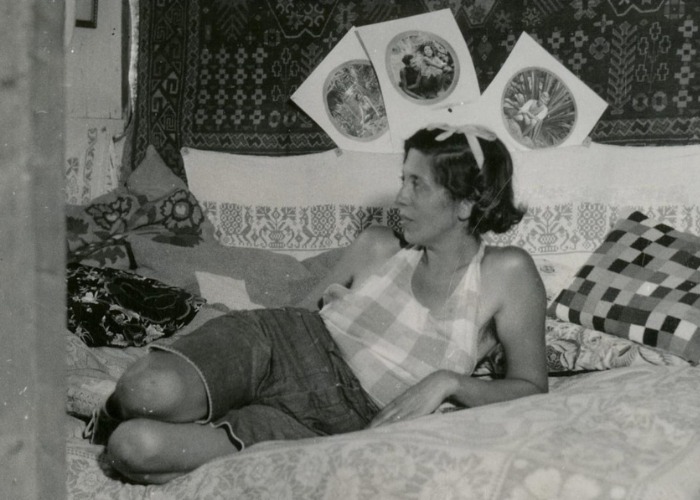
In August 1932, Margret Wittmer, her husband Heinz Wittmer, and Heinz’s son Harry arrived on Floreana from Germany. Their settlement differed fundamentally from others of the era.
They did not arrive to test philosophical ideas or to create spectacle. They arrived as a family unit with the intention to remain.
The Wittmers established themselves in the highlands near Asilo de la Paz, close to one of Floreana’s reliable freshwater sources. Early accounts consistently describe the use of natural caves for shelter and storage while more permanent structures were developed. These caves still exist today and are part of the island’s historical landscape.
At the time of arrival, Margret Wittmer was pregnant—a fact that underscores the nature of their commitment. This was not a temporary retreat, but a deliberate decision to build a life under austere conditions.
On January 1, 1933, Margret Wittmer gave birth to Rolf Wittmer on Floreana. He is widely recognized as the first documented birth in the Galápagos Islands. While phrasing varies between sources, the event itself is undisputed and well documented.
For modern terravelers, this moment marks a turning point in Floreana’s story: from a place of transient occupation to a place where generational life began.
Between 1932 and 1934, Floreana became the setting for a series of events later popularized as the “Galápagos Affair.” Multiple settlers lived on the island during this period, and several deaths and disappearances occurred.
What matters for the Wittmer history is restraint.
The Wittmers were present, but they were not central figures in the later sensational narratives. Surviving accounts—including Margret Wittmer’s own memoir—reflect a cautious distance from interpersonal conflict and public drama. As with all first-person historical accounts, her writings represent one perspective among several, and modern historians treat them as such.
Importantly, no legal findings or verified records establish criminal responsibility for any member of the Wittmer family in connection with these events. Any suggestion otherwise belongs to speculation rather than documented history.
Following the departure or death of other early settlers, the Wittmers remained.
This decision defines their historical role more than any single event. While Floreana’s international reputation became tied to mystery, the island itself entered a quieter phase—one shaped by agriculture, livestock, and routine survival.
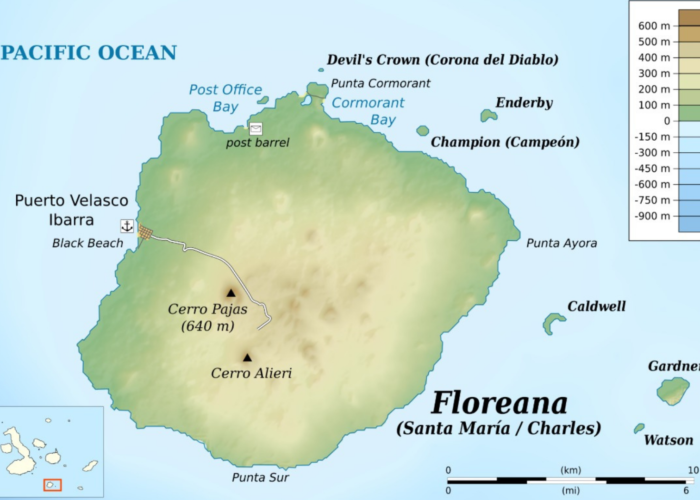
Around 1950, the family moved from the highlands toward the coastal area near what is now Puerto Velasco Ibarra, aligning with the island’s gradual shift toward maritime access and limited external contact.
In 1951, Heinz Wittmer’s son Harry Wittmer died in a boating accident. Such incidents were tragically common in remote island environments, where transport depended entirely on small vessels and weather conditions were unpredictable.
This event underscores an essential truth for terravelers: Floreana’s history is not romantic survivalism. It is lived risk, repeated over generations.
Margret Wittmer lived most of her life on Floreana and became one of the island’s principal historical voices. Her memoir, published in multiple editions and languages, introduced international audiences to Floreana’s early settler period.
While often cited in popular retellings, her work is best understood as a personal historical record, not a judicial or comprehensive account. Nevertheless, it contributed to growing international awareness of Floreana and, indirectly, to early tourism interest.
Over time, the Wittmer family began hosting visitors, eventually operating what became known as Wittmer Lodge, one of the island’s longest-running accommodations.
Margret Wittmer died in 2000, at the age of 95, and is buried on Floreana alongside her husband Heinz, who died in 1963.
Rolf Wittmer, born on Floreana in 1933, represents the bridge between isolation and modern regulated tourism.
In 1982, he founded a Galápagos cruise operation that later carried his name. This venture operated within Ecuador’s evolving conservation framework and reflected a broader shift across the archipelago: from informal visitation to structured, regulated travel.
In 2006, the Rolf Wittmer Foundation was established, supporting community, education, and sustainability initiatives on Floreana. The foundation is frequently cited in conservation and travel literature as a local stakeholder organization.
Rolf Wittmer died in 2011, but his legacy remains embedded in both tourism operations and local institutions.
Today, members of the extended Wittmer family remain associated with Floreana through hospitality, tourism, and community initiatives. While some travel sources exaggerate claims about population composition, it is accurate to state that the Wittmers remain one of the island’s foundational families, historically and economically.
For terravelers, this continuity explains why Floreana feels markedly different from other inhabited islands in the Galápagos. It is less commercial, less crowded, and still deeply shaped by families whose roots predate mass tourism.
Visiting Floreana is not about chasing mystery. It is about understanding endurance.
The Wittmer story illustrates how life on the Galápagos shifted—from survival, to settlement, to stewardship. It also explains why Floreana today prioritizes small-scale tourism, regulated access, and community continuity.
For terravelers willing to slow down, this island offers something rare in the Galápagos: a sense of lived history that never became spectacle.
Some travel content doesn’t fit neatly into destinations, itineraries, or planning guides — yet it still exists for a reason.
These pages cover niche topics, one-off ideas, and practical details that are rarely searched for, but might be exactly what you’re looking for if you enjoy digging a little deeper.
For terravelers who like to explore beyond the obvious.
Last updated: February 2026 · Written and reviewed by Christian Greiner, founder of Terra Sur Travels, based in Quito, Ecuador.