- Terra Sur Travels
- Floreana Island – Ghosts of the Galapagos Affair
- Galapagos Entrance Fee Doubled to $200
- Travel Guides & Smart Tips
- The creation of the Galapagos Islands
Estimated reading time: 15 minutes

Estimated reading time: 15 minutes
The Galapagos Affair refers to a series of unexplained disappearances and deaths on Floreana Island in the early 1930s, involving European settlers drawn to the islands’ isolation.
The so-called Galapagos Affair gained worldwide attention in 1935. After several mysterious events happened amongst mostly german settlers on the island of Floreana in 1934. In its course various people died under partly unexplained circumstances while others disappeared without a trace.
The media around the globe reported on the events and it spawned several books and movies.
Starting in the late 1920s, several groups of German dropouts settled on the uninhabited island of Floreana, in the south of the Galapagos archipelago.
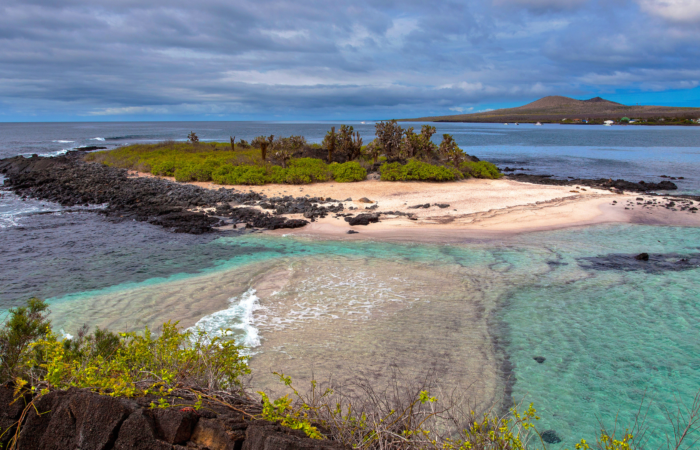
Floreana Island is part of the Galapagos archipelago in its very south. It was discovered by Tomás de Berlanga, a Panamanian bishop, in 1535.
Over the centuries it served as a convict colony and as a base and hideout for pirates. Also, Charles Darwin visited the island. But it wasn’t constantly populated until 1929.
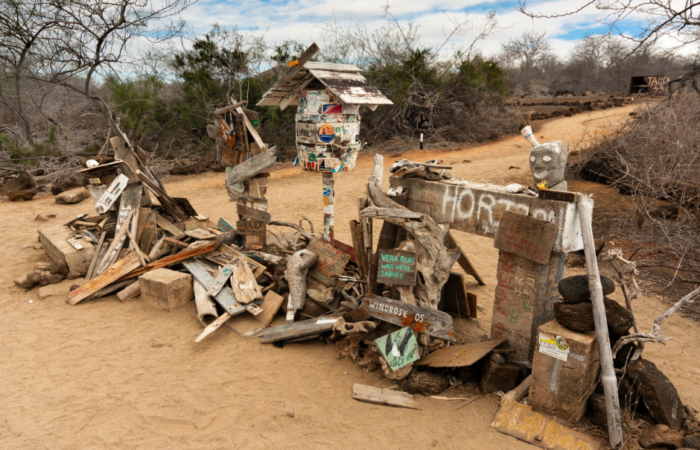
To this day, an old barrel, once set up by whalers in the late 18th century, serves as a mailbox for ships to pick up letters for recipients all over the world.
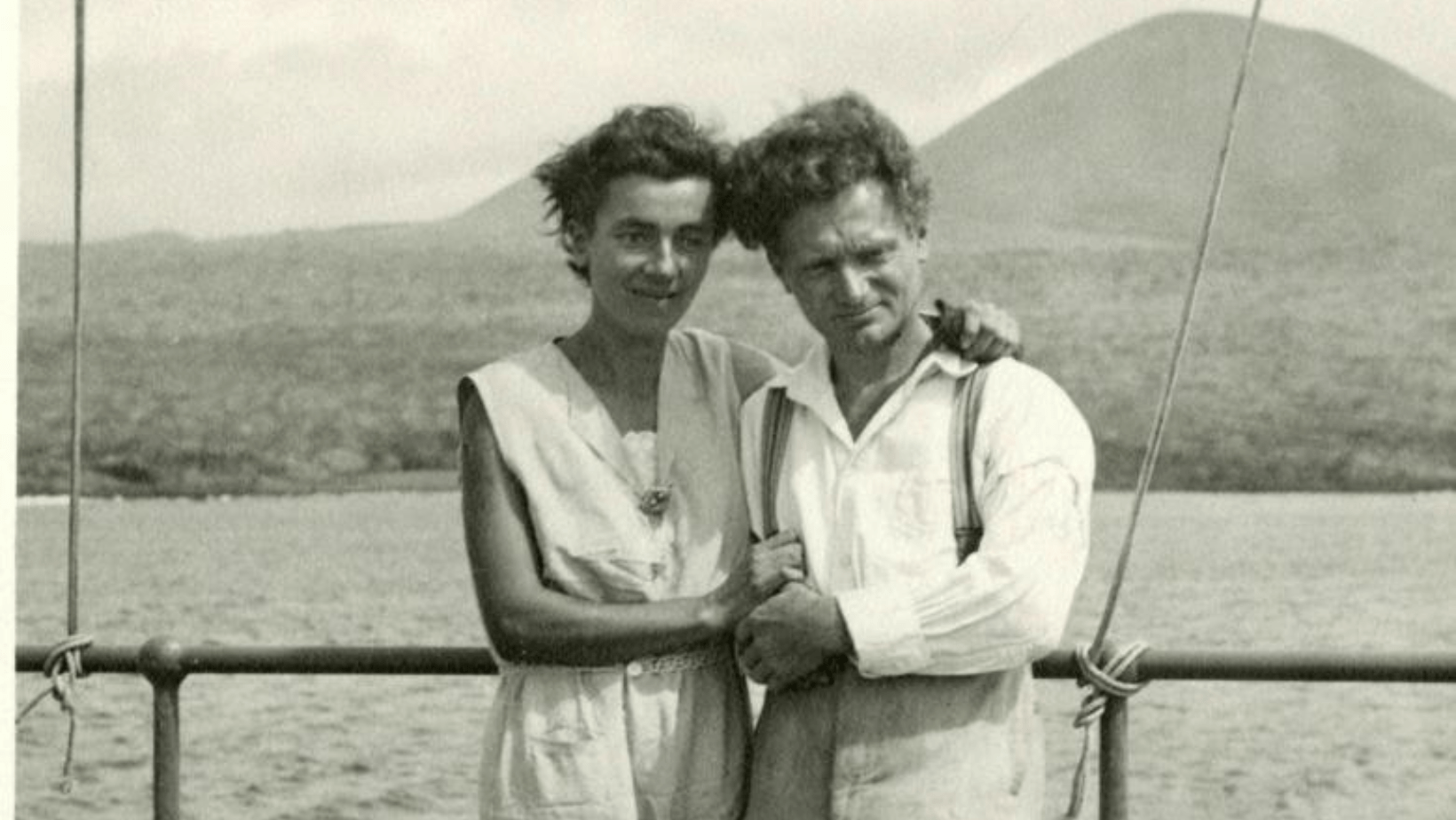
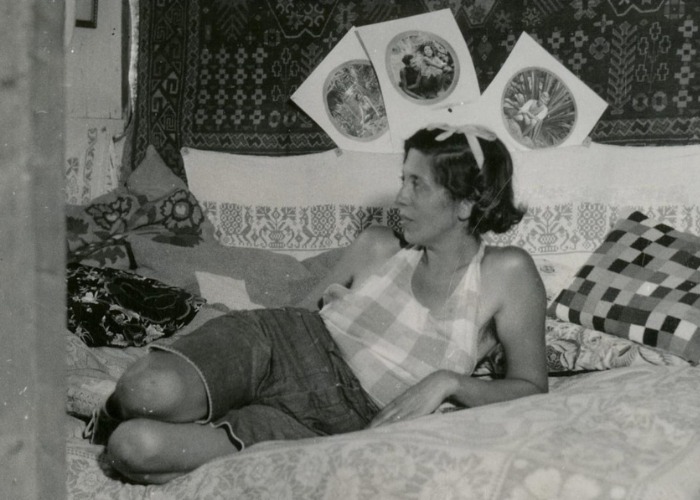
Friedrich Ritter, a doctor from Berlin, with his life partner Dore Strauch, a teacher, switched partners before leaving Europe. They both traveled to Floreana, their Eden, while his wife moved in with her husband back in Germany.
We should also mention that both of them had all of their teeth removed to prevent dental problems.
Ritter was driven by a fundamental rejection of the western civilization, a combination of philosophies, and a mix of crude life reform considerations.
In his opinion, illnesses, for example, should be overcome by the “power of thought” rather than with medication. In his rejection of the capitalist form of society and economy, he called the USA an “ant society”.
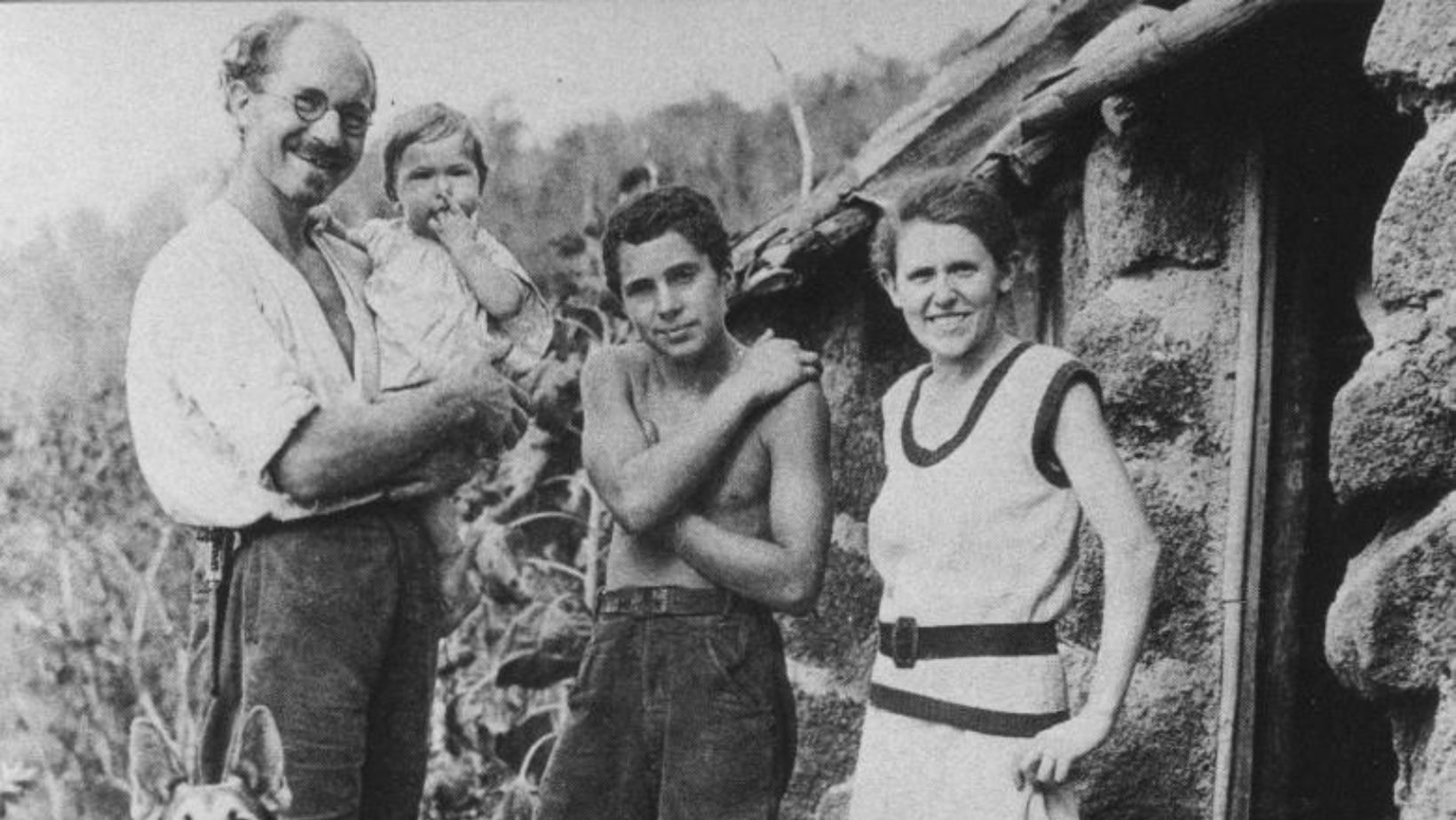
Inspired by Ritter, Heinz and Margret Wittmer, from Cologne, settled 2 years later with their 12-year-old son, Harry.
On the one hand, the Wittmers tried to escape the economic crisis in Germany, on the other hand, they hoped that the climate would improve Harry’s state of health, who was suffering from lung and eye diseases. However, this hope was not fulfilled.
Margret was pregnant when arriving in Floreana, and their son Rolf was the first child officially born in Floreana.

A woman named Eloise Wehrborn de Wagner-Bosquet, possibly an impostor, who called herself “The Baroness”, settled on the island. Accompanied by her two lovers, Rudolf Lorenz and Robert Philippson.
This distracted the quite conservative lifestyles of the other settlers. This will later turn out to be the beginning of the end.
Lorenz was part of that love triangle in the beginning. Later he was treated more and more like a work slave by the other two.
The baroness had planned to build a luxury hotel on Floreana, called Hacienda Paradiso, mostly for wealthy Americans . To realize her plans, she brought with her cows, donkeys and chicken, as well as 80 hundredweight of cement.
In the end, the paradisiacal Hacienda consisted only of a corrugated iron shack with two rooms.
From the beginning, life on the island wasn’t easy. The growing leadership claim by the baroness burdened living together. She tried to control the island’s limited freshwater resources, the incoming mail and food deliveries.
Written submissions by Ritter and the Wittmers to the Ecuadorian authorities to put an end to the baroness’ violent activities did not lead to any improvement in the situation.
In her eyes ‘unwelcome visitors’ were violently kicked off the island.
A Norwegian settler who visited the island for hunting was expelled at gunpoint.
But also the relationships within the groups changed dramatically:
The relationship between Friedrich Ritter and Dore Strauch, who was unable to cope with the difficult living conditions on the island due to multiple sclerosis, became increasingly difficult. According to eyewitness reports, Ritter physically abused Strauch, sometimes in the presence of others.
Rudolf Lorenz fell ill with Tuberculosis and was increasingly forced into the role of a work slave and regularly beaten by his physically superior rival Philippson.
Lorenz even confided to the Wittmers that he feared for his life, and that the Baroness planned on murdering him.
In 1934, a series of events ended the supposedly peaceful life in paradise.
Due to the failure in building the hotel, the baroness told the Wittmers that she and Philippson were planning to leave the island for Tahiti. But they both suddenly disappeared without a trace.
It’s not clear if Lorenz was involved in the disappearance.
He sold all of their belongings and hired a Norwegian fisherman to bring him to San Cristobal Island. There he wanted to catch a ship back to Europe.
It’s blurred what happened next. Lorenz’s and the fisherman’s corpses were later found on Marchena Island, further north, where they probably died of thirst since Marchena has no freshwater resources. The boat and an Ecuadorian shipboy who was with them were never found.
Friedrich Ritter died soon after of food poisoning. Dore Strauch is a possible suspect for his death. She allegedly served the (quite hypocritical) vegetarian and grain despiser Ritter undercooked chicken.
Recent sources highlight that the events surrounding the baroness continue to spark debate among historians and Galapagos guides alike, keeping the mystery alive to this day.
Many publications in newspapers around the world followed. Most famously by Georges Simenon. He wrote articles for a French newspaper about it as well as a novel, ‘Ceux de la soif’.
The events were so famous at some point, that even Franklin D. Roosevelt took a trip to Floreana in 1938 to meet the Wittmer family. Unfortunately, they were not home.
Margret Wittmer survived all protagonists of the Galapagos Affair, dying in the year 2000, at age 96 on ‘her’ island. Her descendants still live there today.
Besides numerous media coverages over the decades, there is also a great documentary about the affair. The Galapagos Affair: Satan came to Eden by Daniel Geller and Dayna Goldfine, and should not go unmentioned.
After decades of fascination with the strange events on Floreana, the story has now reached the big screen. In 2025, the feature film Eden was released, directed by Ron Howard, who turned the infamous Galápagos Affair into a survival thriller.
The cast brings the key figures of the island drama vividly to life:
Jude Law steps into the role of Dr. Friedrich Ritter, the German doctor who sought to create a utopian life away from civilization.
Vanessa Kirby portrays Dora Strauch, his loyal partner in this radical experiment.
Daniel Brühl and Sydney Sweeney appear as Heinz and Margret Wittmer, the determined couple who added a new dynamic to the island’s fragile balance.
Ana de Armas plays the Baroness Eloise, a charismatic and ambitious woman whose arrival shifted the course of events.
With its intense performances and striking visuals, Eden transforms the historical mystery of the Galápagos Affair into a cinematic tale of survival, obsession, and the fragility of human ideals.
It was directed by the great Ron Howard and is definitely a great way to spend an evening.
Welcome to Eden!
Last updated in February 2026:
This article was updated to include recent visitor perspectives and new details about the legacy of the Galapagos Affair on Floreana Island.
Today, the echoes of the Galapagos Affair can still be felt on Floreana Island. Terravelers visiting the island won’t find dramatic monuments or crime scene markers—but they will encounter quiet trails, abandoned sites, and a sense of isolation that makes the story feel eerily present. Floreana remains one of the least visited inhabited islands in the Galapagos, accessible only by boat and with limited infrastructure. For travelers interested in history, solitude, and the human stories behind the archipelago, this island offers a very different perspective on the Galapagos.
The mystery didn’t end with the disappearances. Floreana Island still holds secrets, scars, and stories — and its atmosphere today is shaped by those eerie events of the 1930s.
👉 Discover what remains of the Galapagos Affair on Floreana — and why this island still haunts the archipelago’s imagination.
Some travel content doesn’t fit neatly into destinations, itineraries, or planning guides — yet it still exists for a reason.
These pages cover niche topics, one-off ideas, and practical details that are rarely searched for, but might be exactly what you’re looking for if you enjoy digging a little deeper.
For terravelers who like to explore beyond the obvious.
Last updated: February 2026 · Written and reviewed by Christian Greiner, founder of Terra Sur Travels, based in Quito, Ecuador.