Rapa Nui – Moai, Volcanoes & Polynesian Culture

0
Price
Price
The tour is not available yet.

Proceed Booking

Save To Wish List

Adding item to wishlist requires an account

25

Rapa Nui – Moai, Volcanoes & Polynesian Culture

4 Days / 3 Nights

Tour Overview

Fly from Santiago into the middle of the Pacific for four days exploring the extraordinary archaeological landscapes and living Polynesian culture of Rapa Nui. Visit the moai quarry of Rano Raraku, watch the monumental statues of Ahu Tongariki emerge from the volcanic landscape, explore the ceremonial village of Orongo, and spend time at palm-fringed Anakena Beach. With private transfers, comfortable accommodation, and guided exploration of Rapa Nui National Park, this compact itinerary covers the island’s essential experiences without turning every day into a race.

Day 1 – Santiago → Rapa Nui and Hanga Roa

Begin early in Santiago and transfer independently or by pre-arranged private vehicle to Arturo Merino Benítez International Airport.

Board the nonstop flight from Santiago to Mataveri International Airport on Rapa Nui. The flight takes approximately 5 hours and 30 minutes, crossing thousands of kilometers of open Pacific before reaching one of the world’s most isolated inhabited islands.

Before departure from Santiago, travelers must comply with Rapa Nui’s special entry requirements. These currently include completing the Formulario Único de Ingreso – FUI within the required period before travel, carrying a return ticket, and holding confirmed accommodation registered with SERNATUR or the corresponding authorized documentation. Chile’s tourism authority currently specifies that the FUI should be completed within 48 hours before the flight and that visitors must have a return ticket for a stay not exceeding 30 days.

Upon arrival at Mataveri Airport, meet your local representative and transfer to the hotel in Hanga Roa.

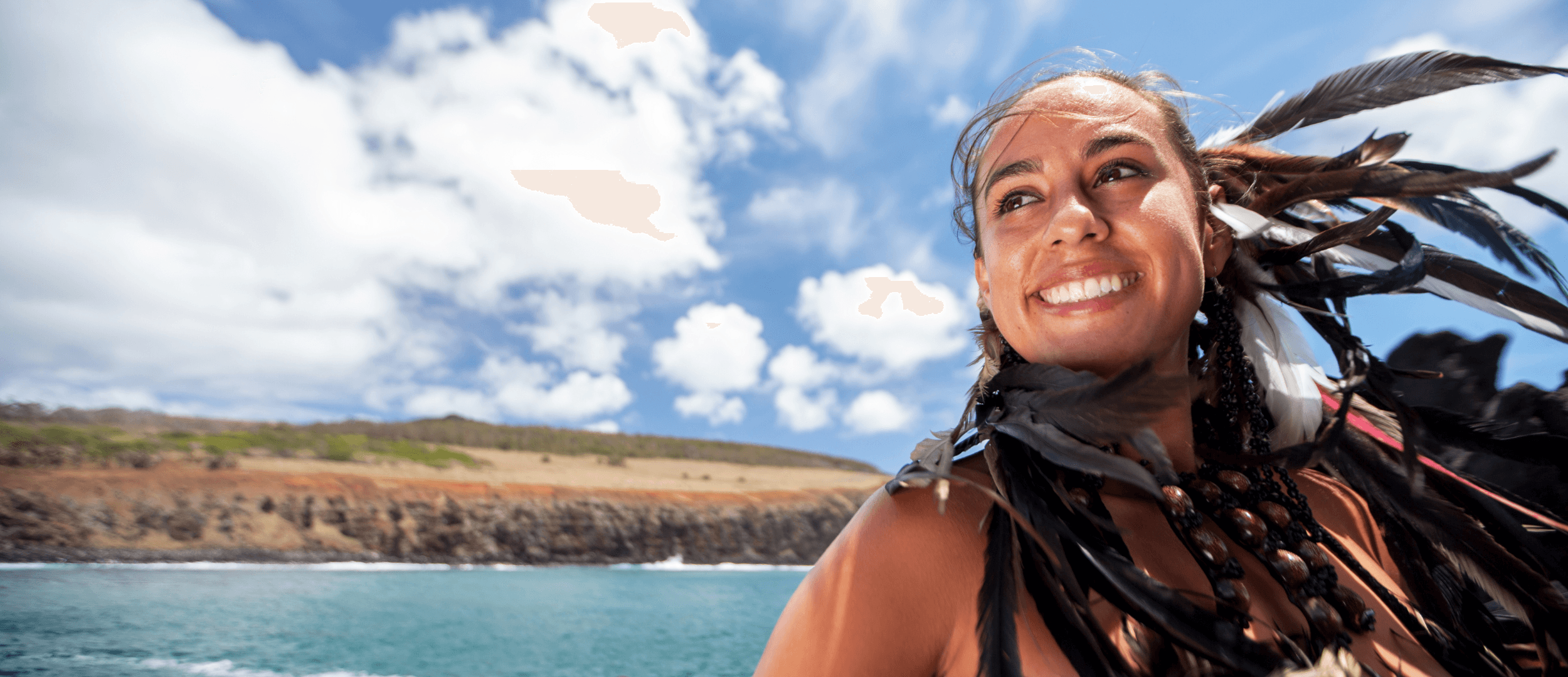
After check-in, the afternoon is deliberately kept relatively light. Walk through Hanga Roa, visit the waterfront, and begin absorbing an island culture that is fundamentally Polynesian despite Rapa Nui’s political connection to Chile.

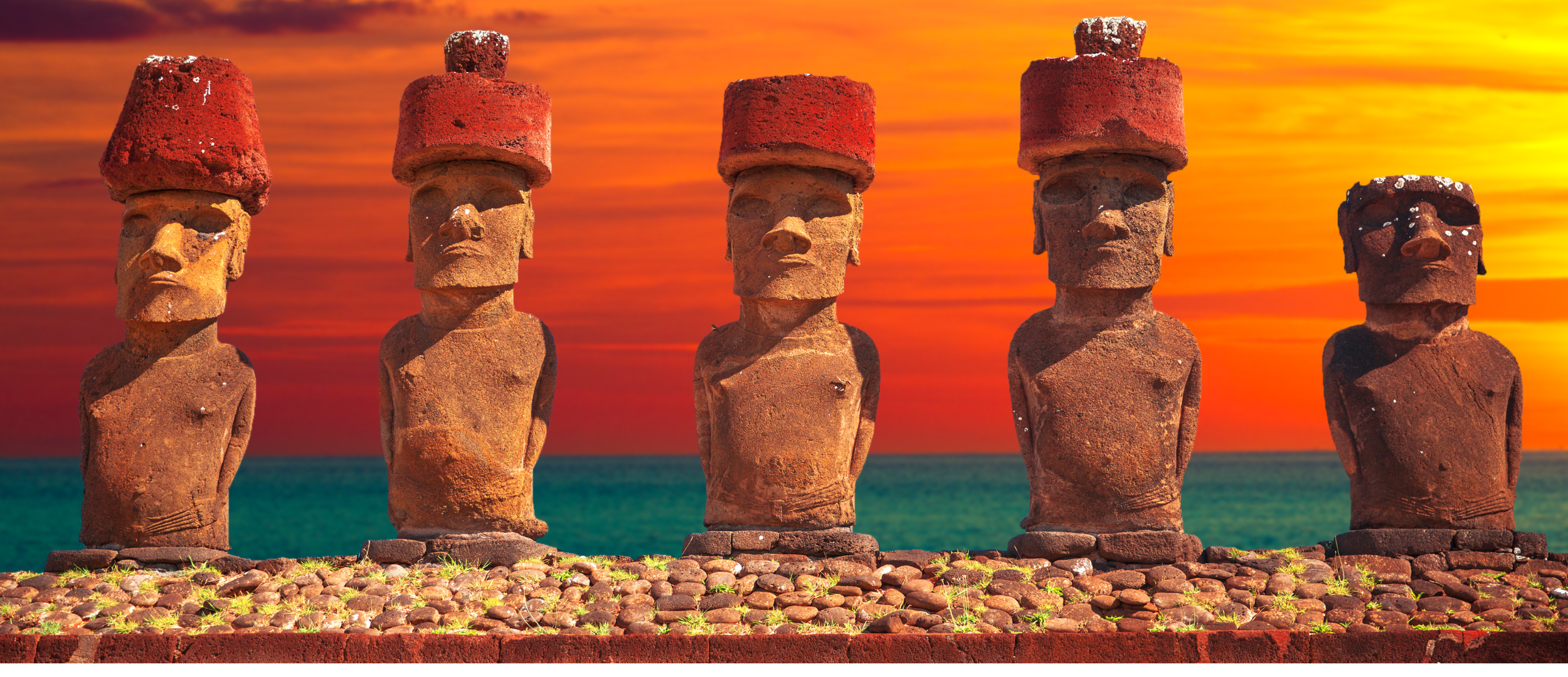
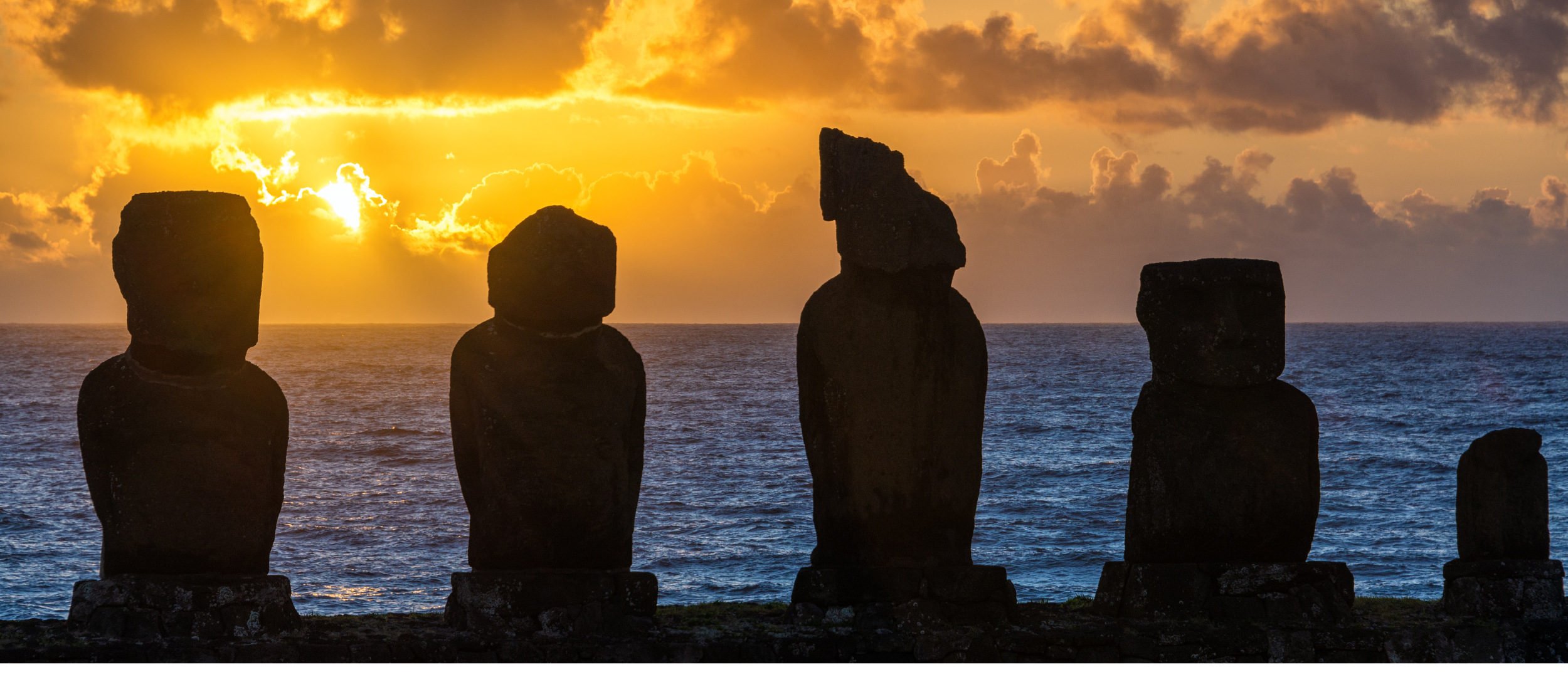
Later, take an introductory excursion to Ahu Tahai, located close to Hanga Roa. This archaeological complex provides an excellent first encounter with restored moai and the ceremonial platforms known as ahu.

Remain near the coast for sunset if weather conditions allow.

Return independently or by arranged transfer to the hotel.

Overnight: Hanga Roa
Meals included: Dinner

Day 2 – Rano Raraku, Ahu Tongariki and Anakena

After breakfast, depart with an accredited Rapa Nui National Park guide for the island’s most important full-day archaeological excursion.

A guide is not merely an optional enhancement here. The Rapa Nui National Park currently states that visitors must have both a valid park ticket and an accredited Ma’u Henua guide to enter protected visitor sites.

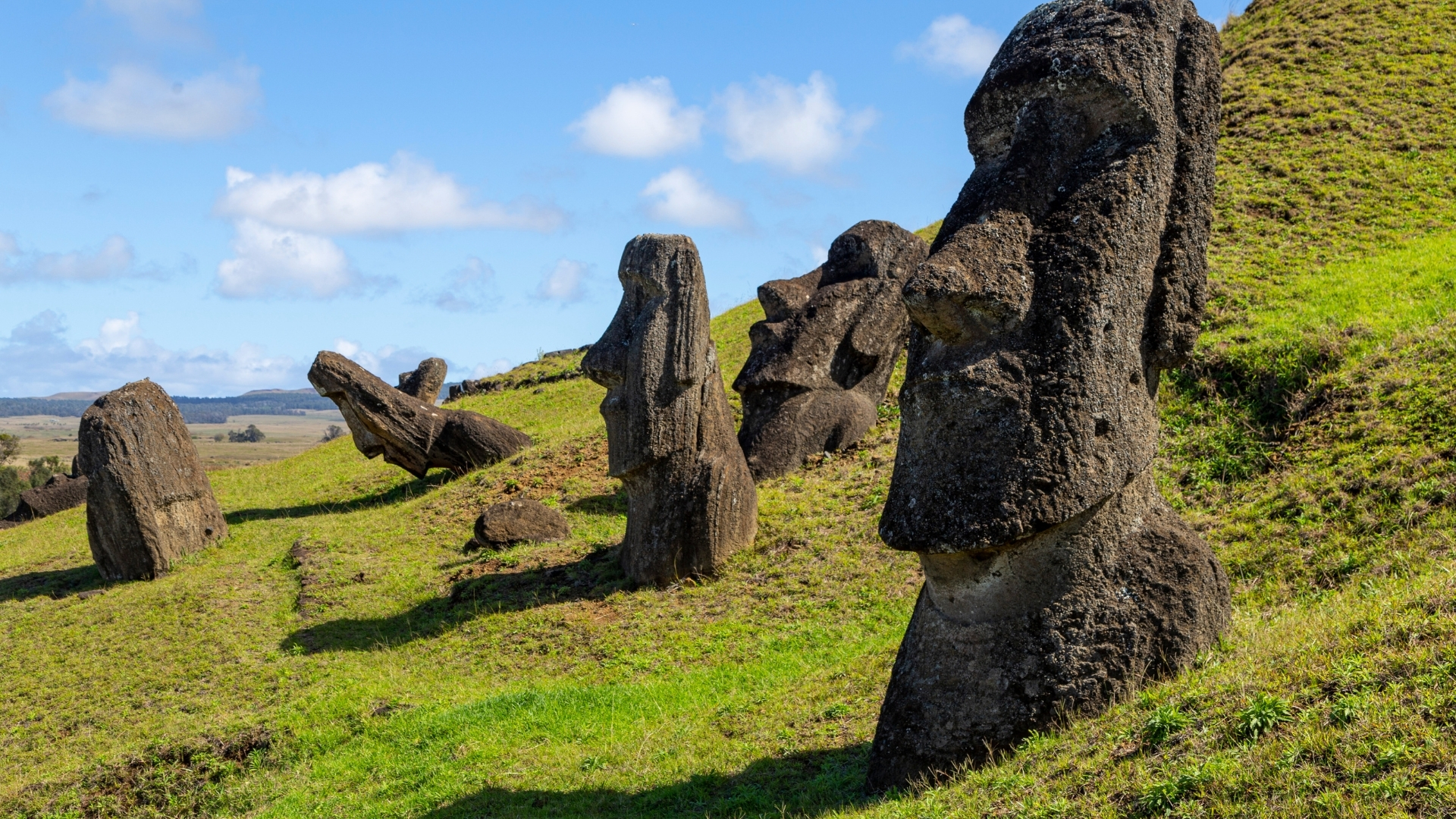
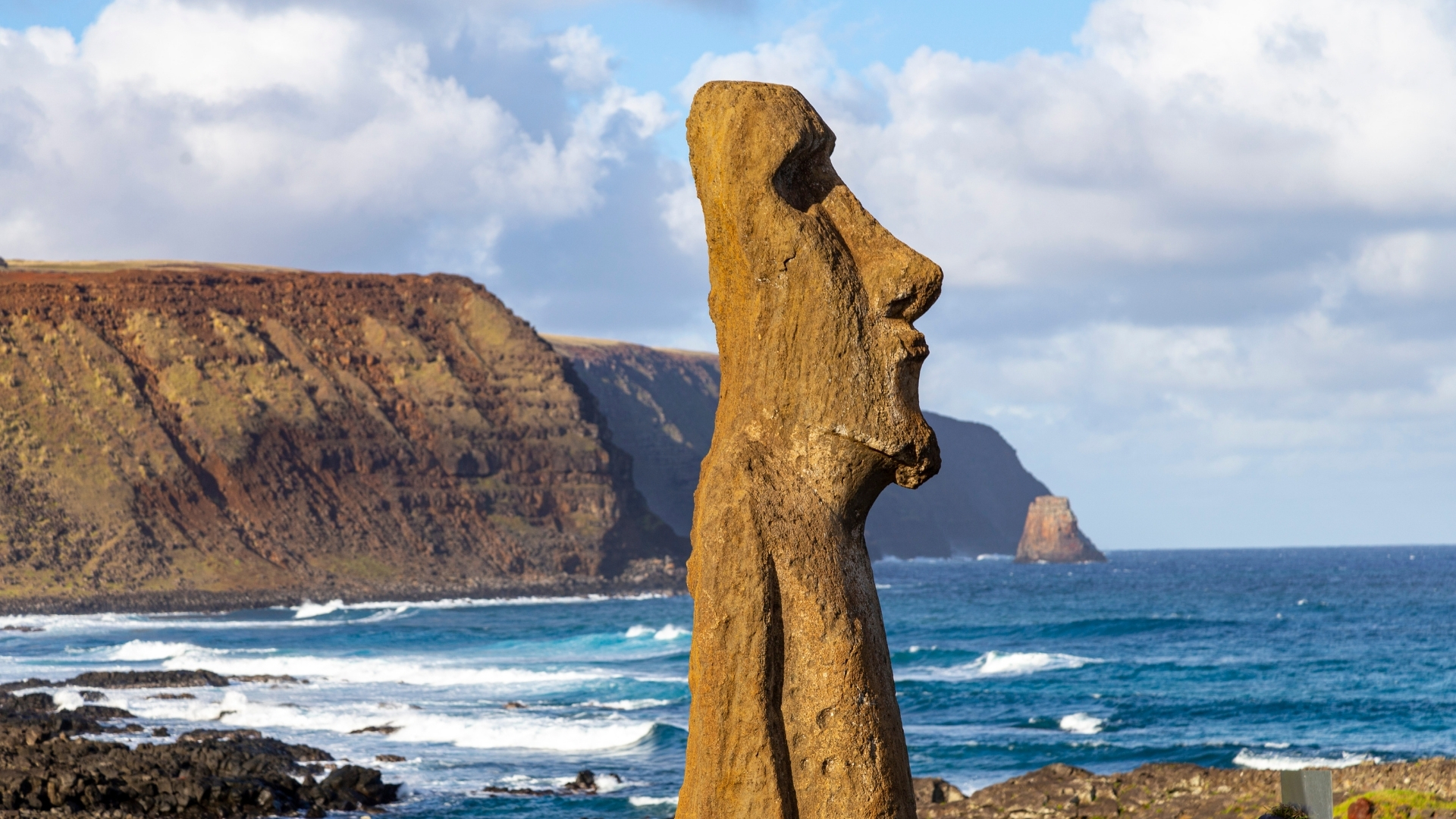
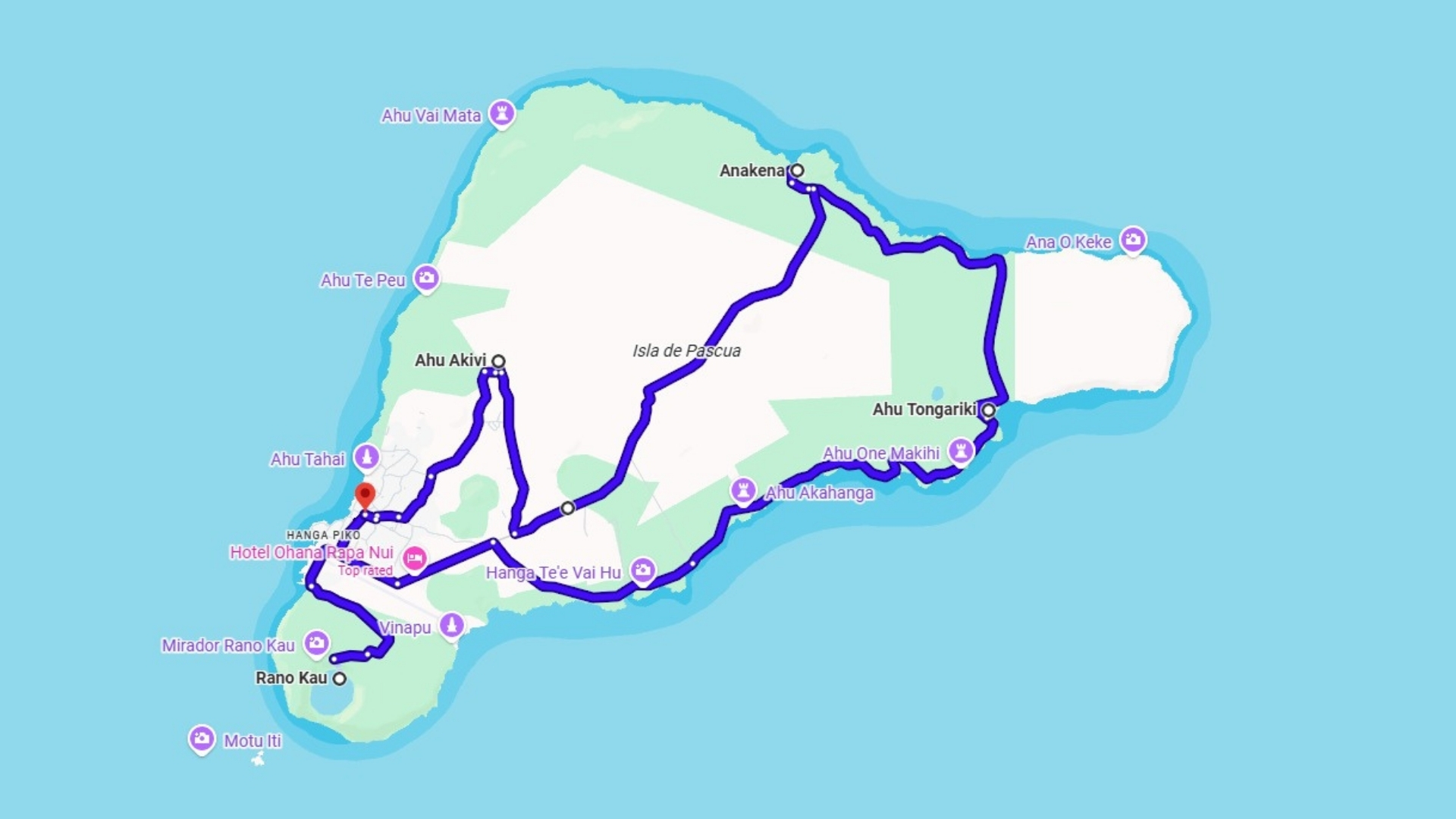
Travel across the island toward Rano Raraku, the volcanic quarry where the overwhelming majority of Rapa Nui’s moai were carved.

This is arguably the single most important archaeological site on the island.

Walk through the quarry landscape, where unfinished and partially transported statues remain scattered across the slopes. Some appear almost complete while others are still physically connected to the volcanic rock from which they were being carved.

The site demonstrates something that photographs rarely convey: moai were not simply isolated statues placed randomly around the island. Their creation required organized quarrying, specialist knowledge, transportation, ceremonial infrastructure, and a sophisticated social system.

Visitors must remain on established trails and may not touch or climb on the moai or ahu. Chile’s official tourism information emphasizes these conservation restrictions at Rano Raraku.

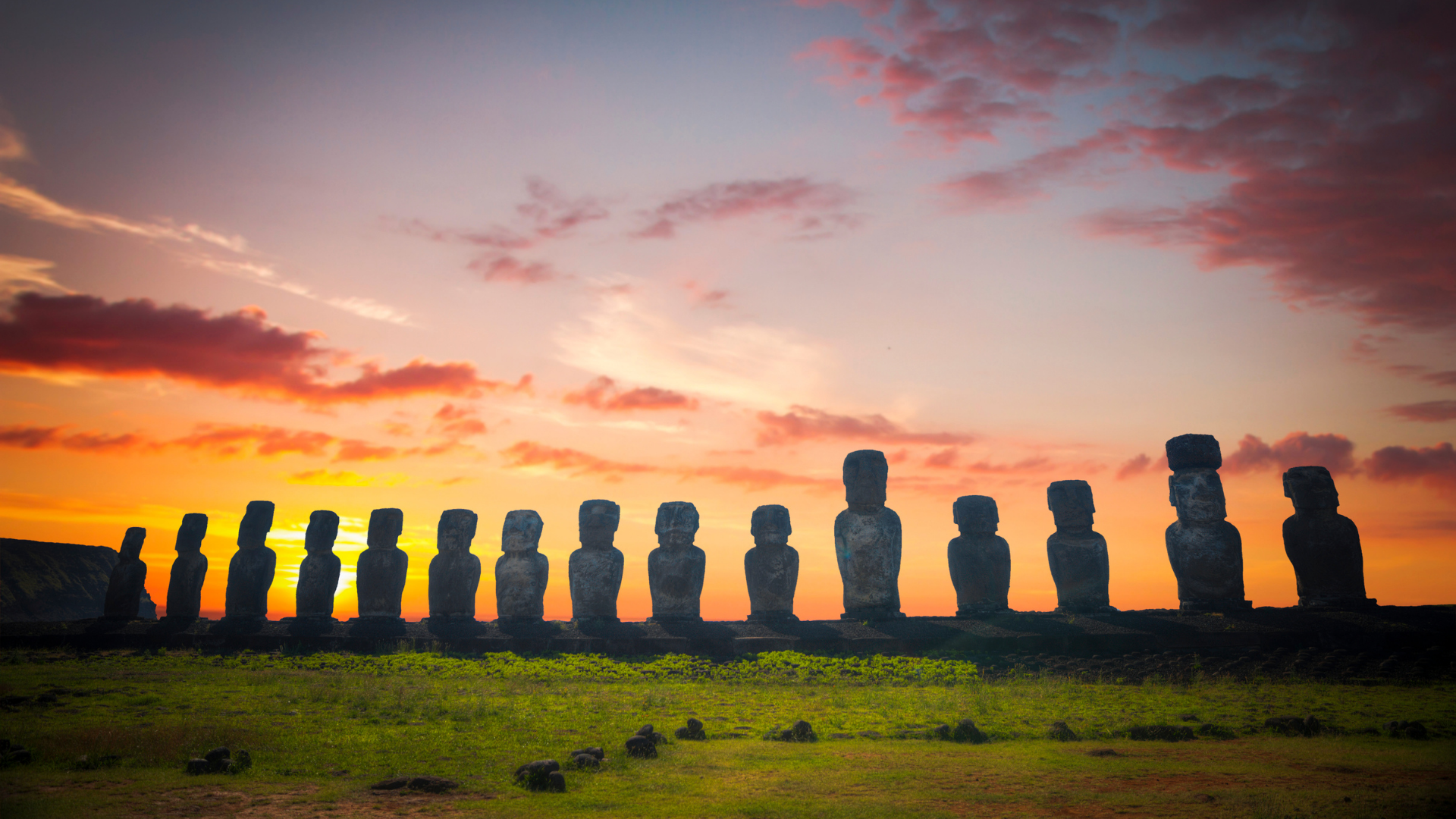
Continue to nearby Ahu Tongariki.

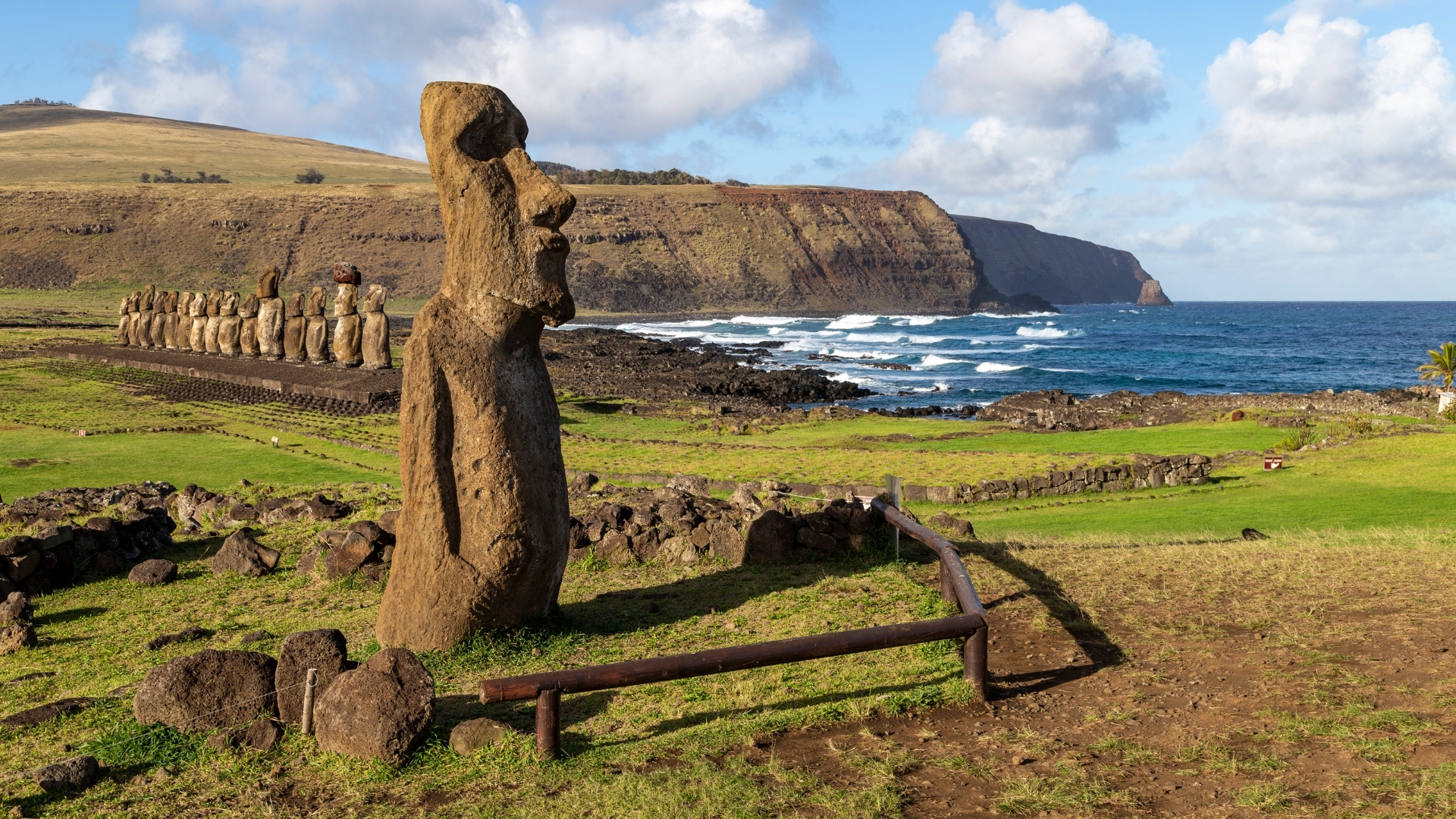
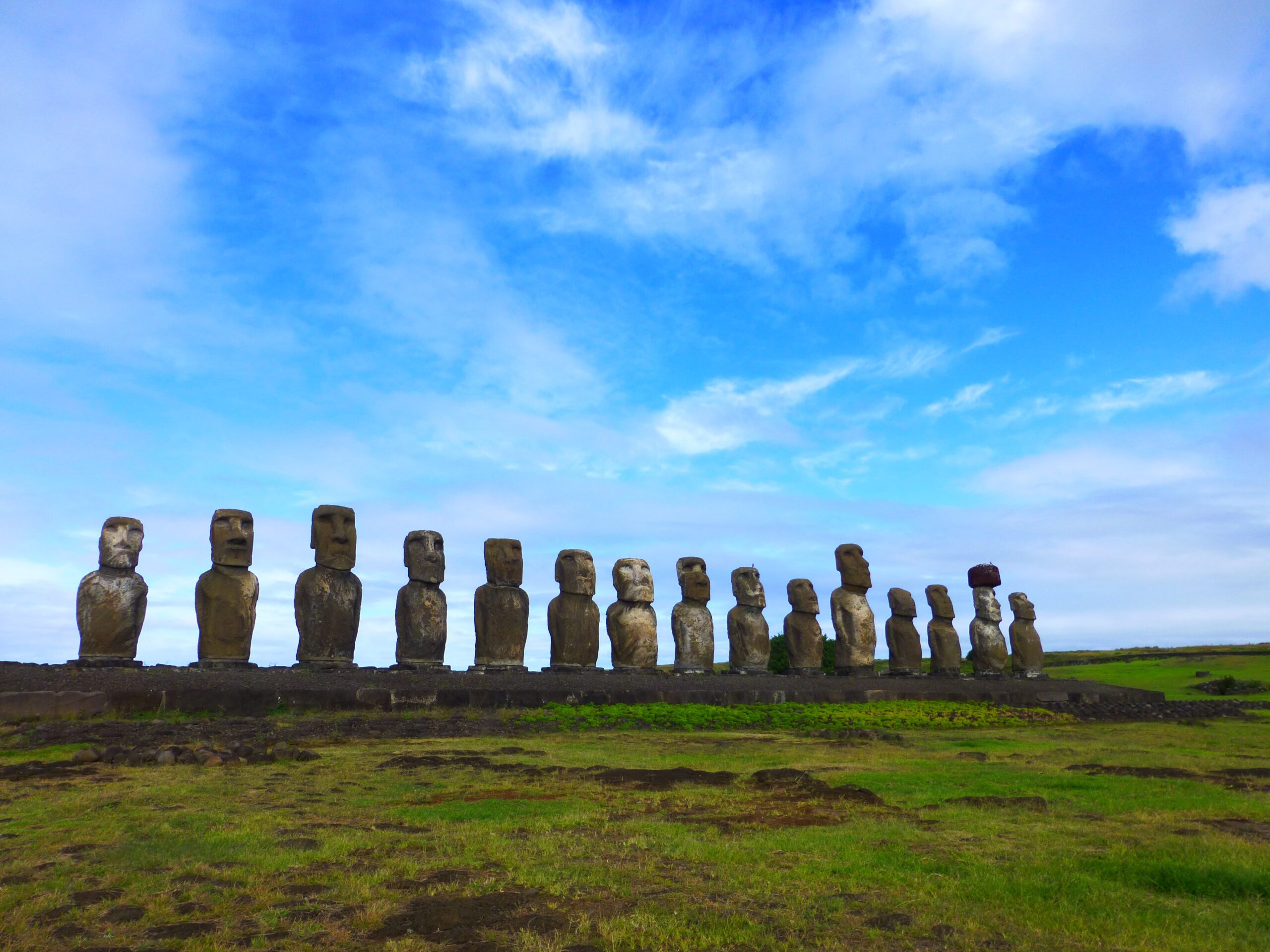
Fifteen restored moai stand side by side on the largest ceremonial platform on Rapa Nui, facing inland with the Pacific behind them. Chile’s official four-day Rapa Nui itinerary identifies Tongariki as one of the island’s defining archaeological experiences.

After exploring Tongariki, continue along the northern side of the island toward Anakena Beach.

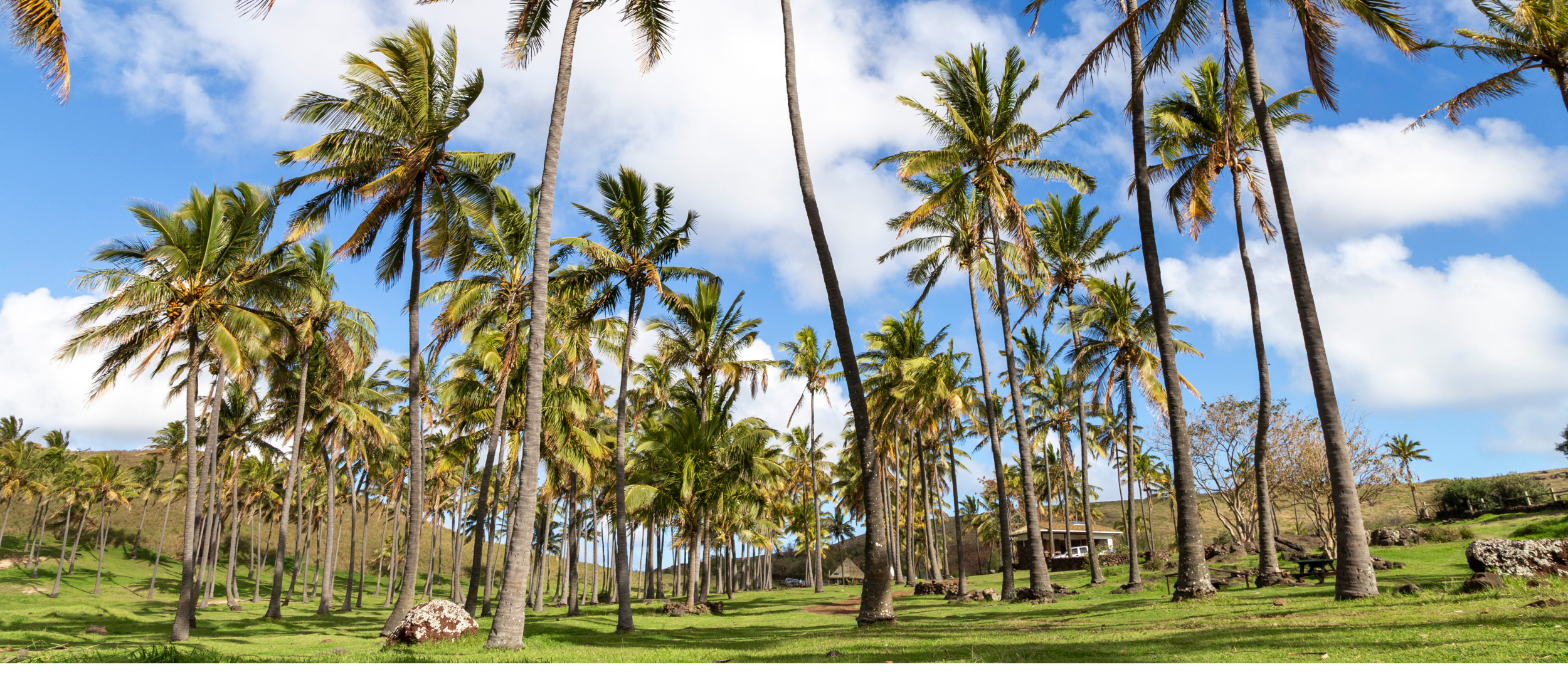
Anakena combines archaeology with one of the few genuinely tropical-looking beaches on Rapa Nui. White coral sand, coconut palms, clear water, and restored moai create a landscape quite different from the darker volcanic coastline elsewhere on the island.

Visit the archaeological sites around the beach before enjoying time for swimming or relaxing, weather permitting.

Lunch can be taken at or near Anakena, either included as a picnic or arranged at a local restaurant depending on the selected tour format.

Return to Hanga Roa during the late afternoon.

The evening is free.

Overnight: Hanga Roa
Meals included: Breakfast and lunch

Day 3 – Rano Kau, Orongo and the Birdman Culture

After breakfast, head toward the southwestern corner of Rapa Nui.

The first major destination is Rano Kau, one of the island’s most impressive volcanic craters.

From the crater rim, look down into a vast caldera containing wetlands and crater vegetation, with the Pacific Ocean stretching beyond. The landscape alone makes Rano Kau one of the most dramatic places on the island.

Continue to Orongo, a ceremonial village associated with the Tangata Manu or Birdman culture.

The Birdman tradition became particularly important during a later period of Rapa Nui history, after the era dominated by large-scale moai construction.

Stone houses cling to the edge of the crater near cliffs overlooking the small offshore islands of Motu Nui, Motu Iti, and Motu Kao Kao.

The annual Birdman competition involved representatives competing for the first egg of the sooty tern nesting offshore. The event carried enormous religious and political importance.

Chile’s official tourism material places Rano Kau and Orongo among the essential experiences of any short Rapa Nui itinerary.

After visiting Orongo, return toward Hanga Roa.

Depending on interests and current visitor-site access, the afternoon can include another archaeological site, a volcanic cave, a coastal walk, or additional time in town.

Alternatively, terravelers may choose a more active experience such as:

  • coastal hiking
  • cycling
  • snorkeling
  • scuba diving
  • horseback riding
  • cave exploration
  • an additional cultural experience

Rapa Nui also offers diving and snorkeling in exceptionally clear Pacific waters, although marine excursions are weather-dependent. Chile’s official tourism information specifically identifies Anakena and the surrounding island waters as locations for swimming and diving.

In the evening, an optional Rapa Nui cultural performance and dinner can be arranged.

The emphasis should be on an established local cultural program rather than presenting modern performances as an untouched reconstruction of ancient life.

Overnight: Hanga Roa
Meals included: Breakfast

Day 4 – Hanga Roa → Santiago

Enjoy breakfast at the hotel.

Depending on the flight schedule, there may be time for a relaxed morning in Hanga Roa.

Possible activities include:

  • souvenir shopping
  • waterfront walk
  • local handicrafts
  • café stop
  • church visit
  • short coastal walk
  • additional archaeological visit if logistics allow

Transfer to Mataveri International Airport with sufficient time for departure procedures.

Board the return nonstop flight to Santiago.

The direct journey back to mainland Chile takes approximately five hours, depending on routing and atmospheric conditions.

Upon arrival at Santiago International Airport, the Rapa Nui extension ends.

Terravelers can continue into Santiago, the wine valleys, the Atacama Desert, Patagonia, or another Terra Sur Travels itinerary.

Meals included: Breakfast
End point: Santiago International Airport

Practical Information

Start and end point: Santiago, Chile → Rapa Nui → Santiago

Tour type: Private tailor-made program with private transfers and private or small-group guided excursions

Duration: 4 days / 3 nights

Physical level: Easy to moderate

Accommodation: Three nights in a selected hotel, guesthouse, boutique lodge, or superior property in Hanga Roa

Best for: First-time Rapa Nui visitors, archaeology lovers, cultural travelers, photographers, couples, families, and terravelers adding Easter Island to a longer Chile journey

Flights: Nonstop Santiago – Rapa Nui – Santiago, normally operated by LATAM; schedules and fares must be checked for the selected travel dates.

Guide: Accredited local Rapa Nui National Park guide during regulated archaeological visits

Recommended stay: 4 days / 3 nights

Minimum sensible stay: 3 days / 2 nights, but not recommended as the standard itinerary

Ideal extension: 4–5 days if diving, hiking, or substantial free time is important

Tour dates: Available year-round subject to flights, accommodation, accredited guide availability, and National Park access

Departure days: Flexible according to current Santiago–Rapa Nui flight schedules

Best planning window: Book flights, accommodation, guide, and park arrangements well in advance, particularly during high season and the Tapati festival period. Chile’s official tourism information specifically recommends advance reservations for accommodation and tours.

Tour Highlights

  • Fly nonstop from Santiago into the South Pacific
  • See the fifteen monumental moai of Ahu Tongariki
  • Explore the moai quarry at Rano Raraku
  • Discover the ceremonial landscape surrounding Anakena
  • Swim at one of Rapa Nui’s best beaches
  • Look into the immense crater of Rano Kau
  • Explore the Birdman ceremonial village of Orongo
  • Learn about Polynesian history with an accredited local guide
  • Watch sunset near the moai of Tahai
  • Stay three nights in Hanga Roa
  • Add diving, hiking, caves, or cultural performances if desired

What Is Included

  • Three nights of accommodation in Hanga Roa
  • Daily breakfast
  • Airport transfers on Rapa Nui
  • Day 1 introductory Hanga Roa and Tahai excursion
  • Full-day Rano Raraku, Ahu Tongariki and Anakena excursion
  • Rano Kau and Orongo excursion
  • Accredited local Rapa Nui guide during regulated National Park visits
  • Private or shared vehicle transportation according to selected package
  • Lunch during the full-day excursion on Day 2
  • Entrance coordination and tour reservations
  • Terra Sur Travels itinerary planning and local logistical assistance
  • Assistance coordinating Santiago–Rapa Nui flights

What Is Not Included

  • International flights to Chile
  • Santiago–Rapa Nui–Santiago airfare unless specifically included in the final quotation
  • Rapa Nui National Park entrance ticket
  • Santiago accommodation
  • Santiago airport transfers unless specifically booked
  • Meals not specifically mentioned
  • Alcoholic beverages
  • Optional cultural dinner and show
  • Optional scuba diving
  • Optional snorkeling excursions
  • Optional horseback riding
  • Optional bicycle rental
  • Personal travel insurance
  • Medical or evacuation insurance
  • Personal expenses
  • Gratuities
  • Additional activities
  • Single-room supplement
  • Services resulting from flight cancellations, weather disruption, National Park closures, or circumstances outside the operator’s control

The National Park ticket should remain separately priced on the website because the official Rapa Nui National Park platform controls current ticket categories and prices, and foreign visitors must select the appropriate foreign-visitor ticket.

Why This Tour Is Ideal for First-Time Rapa Nui Visitors

Four days is, in my view, the sweet spot for a conventional first visit.

The island is small, but the reason for traveling to Rapa Nui is not simply driving around its circumference. Rano Raraku, Tongariki, Orongo, Rano Kau, Anakena, and the surrounding ceremonial sites become considerably more interesting when an informed local guide explains how they fit together historically.

At the same time, Rapa Nui does not require a seven- or eight-day conventional sightseeing itinerary for most travelers.

Unless someone specifically wants diving, multiple hikes, extensive photography, archaeology in depth, surfing, or several completely free days, stretching the basic sightseeing program too far simply creates filler.

Three days is possible, but flight time consumes too much of the first and final days.

Four days / three nights gives you:

Arrival afternoon + two complete sightseeing days + departure morning.

Chile’s own tourism authority currently publishes a four-day Rapa Nui itinerary, which reinforces that this is a sensible length for a comprehensive first visit.

Pricing & Booking

Prices depend on travel season, group size, and whether the tour is operated as a shared group experience or a private tour. For current rates and availability, please contact us directly — we are happy to tailor the experience to your travel plans.

Easter Island