
Estimated reading time: 10 minutes
16Dec
Fruits in Ecuador
Fruits in Ecuador
Welcome, dear terravelers, to an enchanting journey through Ecuador’s botanical treasures—fruits that sing of sun-drenched valleys, misty highlands, and emerald jungles. On this blog we embark on a sensory odyssey into the most remarkable fruits of Ecuador—especially those elusive, soul-stirring gems rarely found in North America or Europe. You’ll also get to savor familiar delights like burritos bananas, small bananas, and granadilla, woven seamlessly into our tapestry. Each fruit is presented with five evocative lines that paint its story. Let’s wander off the beaten path and meet nature’s hidden bounty.
Pepino Dulce (Solanum muricatum) – Sweet Cucumber / Melon Pear
Despite its cucumber name, the pepino dulce is a gentle, creamy fruit closer to honeydew than anything savory. Its ivory skin is often striped with lavender or green, housing a light, floral flesh that cools the palate on Ecuador’s sunlit afternoons. Grown primarily in the highlands around Imbabura and Chimborazo, it’s a staple at rural mercados and family gardens. While virtually unknown outside South America, it’s beloved locally in salads, smoothies, or simply sliced with a dash of lime and salt. Subtle yet sublime, pepino dulce is one of Ecuador’s most understated treasures.
Uvilla (Physalis peruviana) – Goldenberry / Cape Gooseberry
Encased in a papery husk like a lantern, uvilla glows golden yellow when ripe and delivers a tart punch with a hint of tropical sweetness. Sometimes known as Cape Gooseberry or goldenberry, this fruit thrives in the cool highlands and is sold fresh, in preserves, or even dipped in dark chocolate. Its flavor walks the tightrope between sweet tomato and sour citrus, making it unforgettable and versatile in both savory and dessert recipes. Uvilla is a local superfood—loaded with antioxidants and vitamins A, C, and B12—long before “superfood” became a buzzword. Terravelers lucky enough to snack on uvilla fresh from the stalk never forget the burst of Andean sunshine it carries.
Granadilla (Passiflora ligularis) – Sweet Granadilla / Passionfruit Cousin
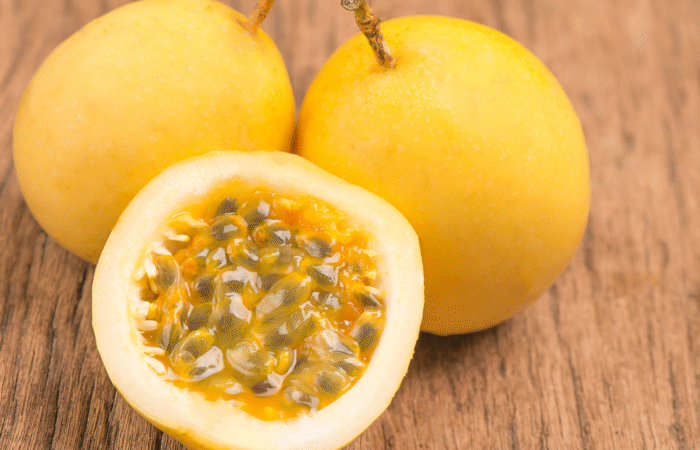
With a shell like a golden egg and a gelatinous interior studded with crunchy seeds, the granadilla is one of Ecuador’s most beloved native fruits. Less acidic than its cousin maracuyá, it’s a soft, sweet passionfruit that children and adults alike scoop out with spoons. In the markets of Quito, it’s sold by the dozen, often wrapped in netting to protect its fragile skin. Though you might find granadillas imported in Europe, they rarely compare to the freshness and perfumed sweetness of the Ecuadorian variety. Pop one open on a mountain hike and taste highland air turned into nectar.
Cherimoya (Annona cherimola) – Custard Apple
With its green, heart-shaped skin marked by gentle scales, the cherimoya is often hailed as nature’s dessert. The creamy white flesh inside has a flavor profile that blends banana, pineapple, and vanilla custard into one dreamlike bite. Grown in the temperate valleys of southern Ecuador, cherimoya is best eaten with a spoon, straight from the chilled fruit. Though rarely exported due to its delicate ripeness window, it’s one of the country’s most rewarding seasonal fruits. For terravelers, cherimoya is both comfort food and exotic adventure—soft, cooling, and impossible to forget.
Babaco (Vasconcellea × heilbornii) – Mountain Papaya
Babaco, shaped like a five-sided star and stretching like a torpedo, is a lesser-known cousin of the papaya family. Unlike its orange relative, it has no seeds and offers a crisp, citrusy flavor that balances pineapple, kiwi, and melon. Grown in Ecuador’s high-altitude gardens, it’s a culinary chameleon—juiced, baked, or preserved as golden jam. Its tanginess gives it a refreshing twist in breakfast spreads or light desserts. Rarely seen abroad due to its fragility, babaco is one of Ecuador’s hidden botanical gems.
Orito (Musa acuminata) – Baby Banana / Finger Banana
Tiny but mighty, orito bananas are Ecuador’s sweetest bananas, bursting with flavor in a pocket-sized package. These “baby bananas” are a staple snack on buses, trails, and school lunches across the country. Sweeter and creamier than standard Cavendish varieties, they ripen to a rich gold and peel with ease. Terravelers often overlook them at first glance, but one bite reveals why locals prize them for energy and flavor. They’re proof that small really is beautiful—and delicious.
Pitahaya (Hylocereus costaricensis / Hylocereus megalanthus) – Dragon Fruit
Pitahaya, or dragon fruit, looks like it’s been pulled from a myth—flaming pink skin, neon spines, and white or magenta speckled flesh. In Ecuador, it’s primarily grown in the dry forest zones of Manabí and Loja, where the cacti flourish under sun and sea breeze. Sweet, hydrating, and subtly floral, pitahaya is perfect for hot days and light desserts. Yellow-skinned varieties (Hylocereus megalanthus) are especially prized for their sweetness and are less common in Western supermarkets. Slicing into one feels like opening a treasure chest of tropical cool.
Naranjilla (Solanum quitoense) – “Little Orange” / Lulo
The naranjilla, or “little orange,” glows like a golden tomato, but surprises with a wild citrus flavor that dances between rhubarb and lime. In Ecuador, it’s transformed into vibrant green juices, especially beloved in the Andes. The fruit’s fuzz-covered skin hides a pulp so tart and aromatic it shocks first-timers—in the best way. Rarely exported due to its fragility, naranjilla is a treasure to be discovered only on Ecuadorian soil. Try it in juice, jam, or cocktails, and you’ll understand why locals call it a must-have.
Tomate de Árbol (Solanum betaceum) – Tree Tomato / Tamarillo
The tree tomato, or tamarillo, looks like a reddish egg and packs a punch of sweet-and-sour flavor, somewhere between a tomato and passionfruit. It’s commonly blended into savory aji sauces or served as thick juice in Ecuadorian breakfasts. The texture is firmer than you’d expect, and the taste lingers like a tangy kiss on the tongue. It’s grown on mountain slopes and markets in Ambato and Riobamba, ripening in cool Andean air. Not widely known outside South America, it’s a revelation to any terraveler brave enough to taste it raw.
Maracuyá (Passiflora edulis) – Passionfruit
Maracuyá is sharp, tropical intensity in a shell—puckeringly tart and deeply fragrant. Ecuadorians juice it daily, sweetened with panela or sugarcane syrup. Its perfume alone is enough to make you thirsty. The wrinkled shell hides orange pulp that’s both medicinal and magical. Mixed into cocktails, desserts, or sauces, maracuyá is pure culinary fire.
Guayaba (Psidium guajava) – Guava
Guayaba smells like candy and eats like perfume—a pink or white pulp bursting with floral sweetness and a touch of grit. Often turned into thick juice or guava paste (bocadillo), it’s a cornerstone of Ecuadorian breakfasts. The seeds are edible but tough, which is why locals often blend or strain the pulp. It grows almost everywhere, from tropical coast to cloud forest. When you smell guayaba, you know you’re in Ecuador.
Taxo (Passiflora tripartita) – Banana Passionfruit
Taxo looks like a yellow zucchini and tastes like a cousin of maracuyá, but smoother and silkier. It’s used in ice cream, juices, and sherbets, lending a mellow tropical note. Native to the Andes, it thrives in cooler zones and is prized for its perfume. While too fragile to travel, it’s omnipresent in Ecuadorian markets. Taxo is the elegant sibling in the passionfruit family—less noise, more depth.
Guanábana (Annona muricata) – Soursop
Guanábana is a spiky green fruit with creamy white flesh and a flavor like pineapple, strawberry, and coconut combined. Its pulp is used in smoothies, ice creams, and even medicinal teas. Known for anti-inflammatory properties, it’s a functional fruit with massive flavor. The fruit is heavy and awkward, but worth every pound. Ecuadorians treat it as dessert and remedy in one.
Guaba (Inga edulis) – Ice Cream Bean
Guaba is a long, green pod that cracks open to reveal sweet, cottony pulp wrapped around glossy black seeds. It tastes like vanilla ice cream with a tropical twist. Found in the Amazon and subtropical valleys, it’s a snack shared among friends on riverbanks or dusty roads. Children love it, and so do nostalgic adults. It’s nature’s candy bar—light, fluffy, and gone too soon.
Mora (Rubus glaucus) – Andean Blackberry
Mora is Ecuador’s bold mountain berry—darker, juicier, and more intense than any blackberry abroad. Its flavor is rich and wine-like, perfect for jams, juices, and desserts. The fruit stains everything it touches and perfumes entire kitchens. Mora juice is served fresh with breakfast all across the Andes. It’s a taste of altitude, color, and wild sweetness.
Cacao (Theobroma cacao) – Cacao Fruit / Chocolate Pod
Cacao isn’t just the root of chocolate—it’s a fruit with its own story. The sticky white pulp around the beans is sweet, tropical, and floral, often sucked fresh on cacao farms. Ecuador grows some of the world’s best cacao, including the legendary Arriba Nacional variety. Terravelers can taste cacao as it was meant to be: raw, fragrant, and alive. Before it becomes a truffle, it’s a jungle treasure.



Rarely searched, occasionally brilliant travel content!
Some travel content doesn’t fit neatly into destinations, itineraries, or planning guides — yet it still exists for a reason.
These pages cover niche topics, one-off ideas, and practical details that are rarely searched for, but might be exactly what you’re looking for if you enjoy digging a little deeper.
For terravelers who like to explore beyond the obvious.





You want to see South America with your own eyes?
Contact Us
[email protected]