- Machu Picchu, Peru – The History and Construction
- Museums in San Jose
- Short Inca Trail Permits No Longer Include Entry to Machu Picchu’s Ancient City
- The Inca Trail in Ecuador
- Peru – Machu Picchu & Altiplano
Estimated reading time: 6 minutes

For over 100 years, the Inca Empire dominated the Andes of South America, building the largest and most powerful kingdom the continent had ever known. From northern Ecuador to central Chile, the Incas expanded rapidly—conquering diverse peoples and creating a vast network of roads, cities, and temples.
Between 1438 and 1533, their empire reached its peak. But it all came to a dramatic end with the arrival of the Spanish conquistadors and the capture of the last Inca emperor, Atahualpa. His death not only marked the downfall of the Inca Empire, but also gave rise to one of history’s most enduring mysteries: the lost treasure of Atahualpa.
In this article, we explore the dramatic events that led to Atahualpa’s fall—and the legend of a treasure that has never been found.
Your emperor may be a great prince; I do not doubt it, seeing that he has sent his subjects so far across the waters; and I am willing to treat him as a brother. As for your pope of whom you speak, he must be mad to speak of giving away countries that do not belong to him.
After his fathers death, his brother Huáscar was crowned Sapa Inka, the new emperor.
Atahualpa himself stayed back in Quito and fulfilled the role of a regional governor, while his brother took the throne in the capital, Cusco.
Or was Huayna’s empire parted between the two brothers? Historians are unclear about this.
Fact is, they were not very fond of each other and soon a war was inevitable.
Around 300.000 men on both sides.
After the first battle near Ambato, where Atahualpa was able to defeat the tribe of the Cañari, he marched further south to Cusco, defeating the Chachapoya and from now on residing in Cajamarca.
Thanks to scouts and spies, between them one of Huáscar’s daughters, who was in love with an officer Atahualpas, Atahualpa could eventually march forward to Cusco.
Treason and a therefore adjusted battle plan decided the outcome of the last clash, and Atahualpa was able to defeat Huáscar’s troops.
His revenge towards Cusco’s people was merciless. Up to one third of the population, including Huáscar’s family and court state were brutally murdered or executed.
But the entire war shouldn’t have been victorious for what was about to happen.
While the civil war was still on the way, the conquistador Francisco Pizarro arrived with 160 armed Spaniards on the northern slopes of the incan territory.
Atahualpa knew that, but underestimated them due to the low number of soldiers.
When he arrived in Cajamarca, Pizarro lured him into an ambush with steel weapons, which the troops of Atahualpa had nothing to oppose. Thousands got killed that day!
Atahualpa was imprisoned.
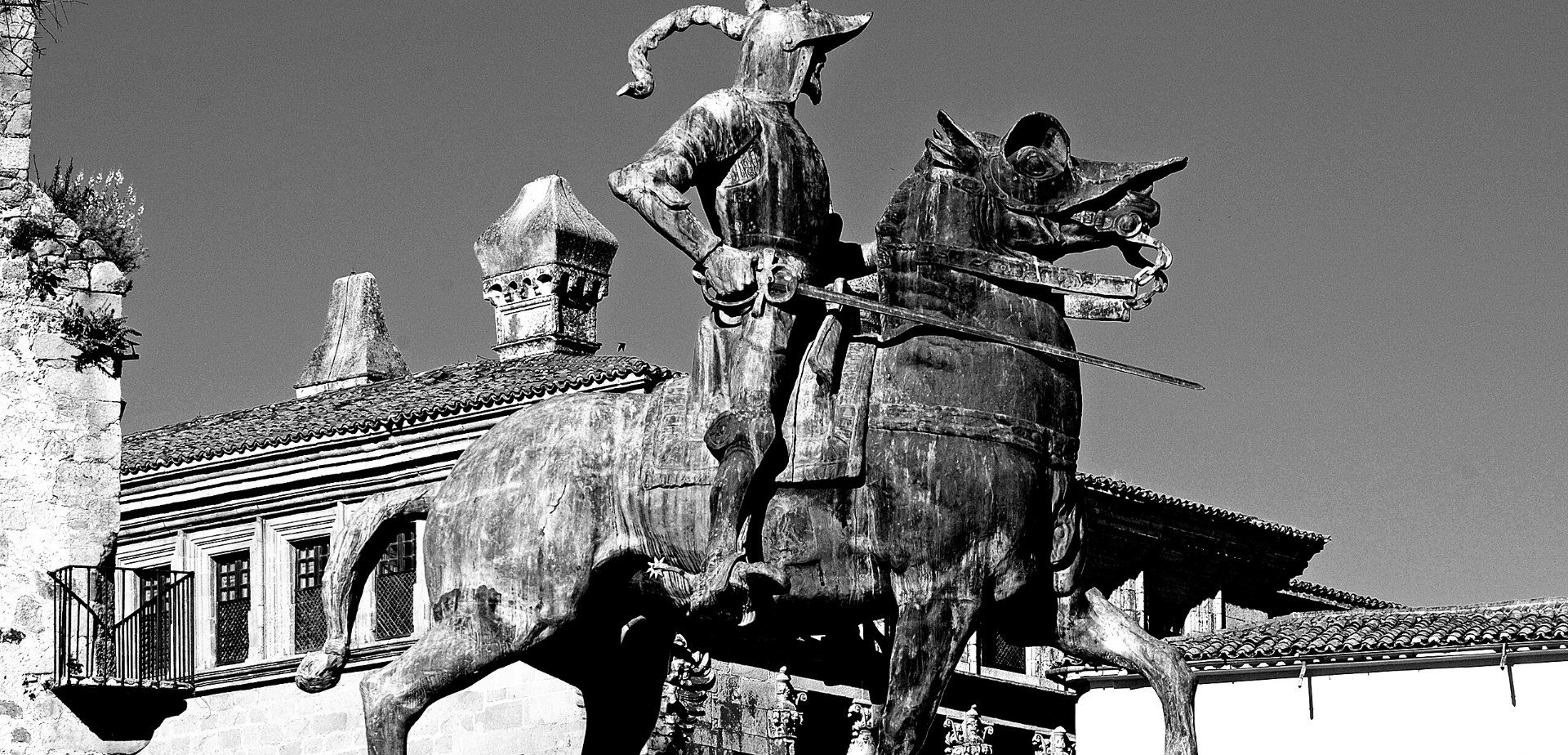
Here is where the story of Atahualpa’s treasure starts!
He was prepared for his death, but soon he realized the Spaniards’ incredible thirst for gold, so he made Pizarro an offer:
The room where he was in at the time should be filled with gold up to the height his hand could reach.
A room of 6,70m by 5,18m and the height of 2,75m.
Additionally, the neighboring room, slightly smaller, would be filled with silver, twice!
Pizarro agreed.
During the next 8 months the Incas brought gold and silver from all over the country, the furnaces in Cajamarca burned for weeks to melt all the gold, while Atahualpa was able to resume his state duties.
Then, rumors arose that the still intact Incan army was planning an attack against the conquistadores, so Pizarro decided against Atahualpa’s life ahead of time.
In a sham process, he was sentenced to death.
Only because he agreed to a christian baptizing, he was spared the stake and strangled by the garrote.
This murder was condemned by many Spaniards as a shameful act and later heavily criticized by the Spanish king, but not punished.
Rumiñahui, one of Atahualpa’s generals, heard of his execution while he was on the way to Cajamarca with 15.000 porters, loaded with gold and silver.
According to the legend, Rumiñahui sent his porters to hide the treasure in uninhabited lands of Ecuador, in caves or lakes.
Rumiñahui continued fighting against the Spanish, and though he was eventually captured and tortured, he never revealed the location of the treasure.
The precious metals they say were left in a volcano as an act of freedom. They believed that this was the only way they could survive what was coming for the people.
Today, historians believe that it was not the treasure of gold and silver that led to the legend, but Atahualpa himself.
In order to crown a new Incan emperor, it was necessary to do so near Atahualpa’s remains.
But the corpse disappeared after the execution.
While going through old testaments and biographies, historians found indications that the traces led to a very remote area within Ecuador: Sigchos.
This piece of land, located between the Illinizas volcanoes and the famous crater lagoon of Quilotoa, is still very rural to this day, but several traces lead to this place.
Machay, a name for an Incan burial site, is found nearby.
Malqui, a name for a mummy as well.
And sure enough, nobody would name a place Malqui-Machay without reason.
Still, after numerous archeologists, anthropologists, and historians that roamed the region for more than a decade, Atahualpa and/or his treasure remain undiscovered.
Well, if discovered or not, there will be thousands of other questions either to remain unanswered or still to be excavated in the future.
Atahualpa himself, or General Rumiñahui probably won’t help us there and both might be smirking in their graves.
Somewhere in Ecuador….